Line Drawing 1
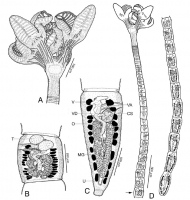
Figure 10. Line drawings of Rhinebothrium fulbrighti n. sp. A. Scolex of Holotype (MZUSP 6309c). B. Subterminal mature proglottid of Paratype
(USNPC 104730). C. Terminal mature proglottid of Paratype... MoreFigure 10. Line drawings of Rhinebothrium fulbrighti n. sp. A. Scolex of Holotype (MZUSP 6309c). B. Subterminal mature proglottid of Paratype
(USNPC 104730). C. Terminal mature proglottid of Paratype (USNPC 104730). D. Anterior and posterior portions of whole worm (Holotype, MZUSP
6309c). Arrow indicates anterior most mature proglottid. Abbreviations: CS, Cirrus sac; MG, Mehlis’ gland; O, Ovary; T, Testes; U, Uterus; V, Vitellaria; VA
Vagina; VD, vas deferens.
doi:10.1371/journal.pone.0022604.g010 |
Line Drawing 2
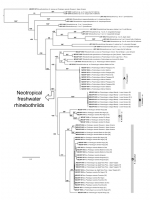
Figure 2. Best-scoring ML tree (2lnL = 7193.942769) based on COI data from marine and freshwater rhinebothriids. Numbers on
internal branches denote nodal support as inferred by Bootstrap Proportions... MoreFigure 2. Best-scoring ML tree (2lnL = 7193.942769) based on COI data from marine and freshwater rhinebothriids. Numbers on
internal branches denote nodal support as inferred by Bootstrap Proportions based on 5,000 replicates. *, indicates nodes recovered during
phylogenetic analysis under parsimony. Numbers between square brackets in front of terminals represent total length in millimeters for those
specimens measured. Scale indicates expected number of substitution per site.
doi:10.1371/journal.pone.0022604.g002 |
Photo Micrograph
|
Scanning Electron Micrograph
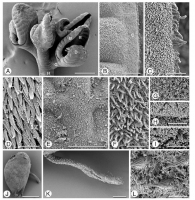
Figure 11. Scanning electron micrographs of Rhinebothrium fulbrighti n. sp. Scolex, Figures A–I. Scolex. A. Scolex. Small letters indicate
locations of details shown in B, D–E, G–H. B. Proximal surfa... MoreFigure 11. Scanning electron micrographs of Rhinebothrium fulbrighti n. sp. Scolex, Figures A–I. Scolex. A. Scolex. Small letters indicate
locations of details shown in B, D–E, G–H. B. Proximal surface of rim of bothridium. Small letter indicates location of details shown in C. C. Proximal
bothridial surface near bothridial rim. D. Proximal bothridial surface. E. Transverse septum on distal bothridial surface. Small letter indicates location of
detail shown in F. F. Transverse septum on distal bothridial surface. G. Stalk surface. H. Cephalic peduncle. I. Strobila surface. Cirrus, Figures J–L. J. Free
proglottid with everted cirrus. K. Everted cirrus. Small letter indicates location of detail shown in L. L. Coniform spinitriches with ridges and filitriches
on cirrus. Scale bars: A, 100 mm; B, 10 mm; C–D, 2 mm; E, 20 mm; F–I, 2 mm; J, 100 mm; K, 20 mm; L, 2 mm.
doi:10.1371/journal.pone.0022604.g011 |
 Global Cestode Database
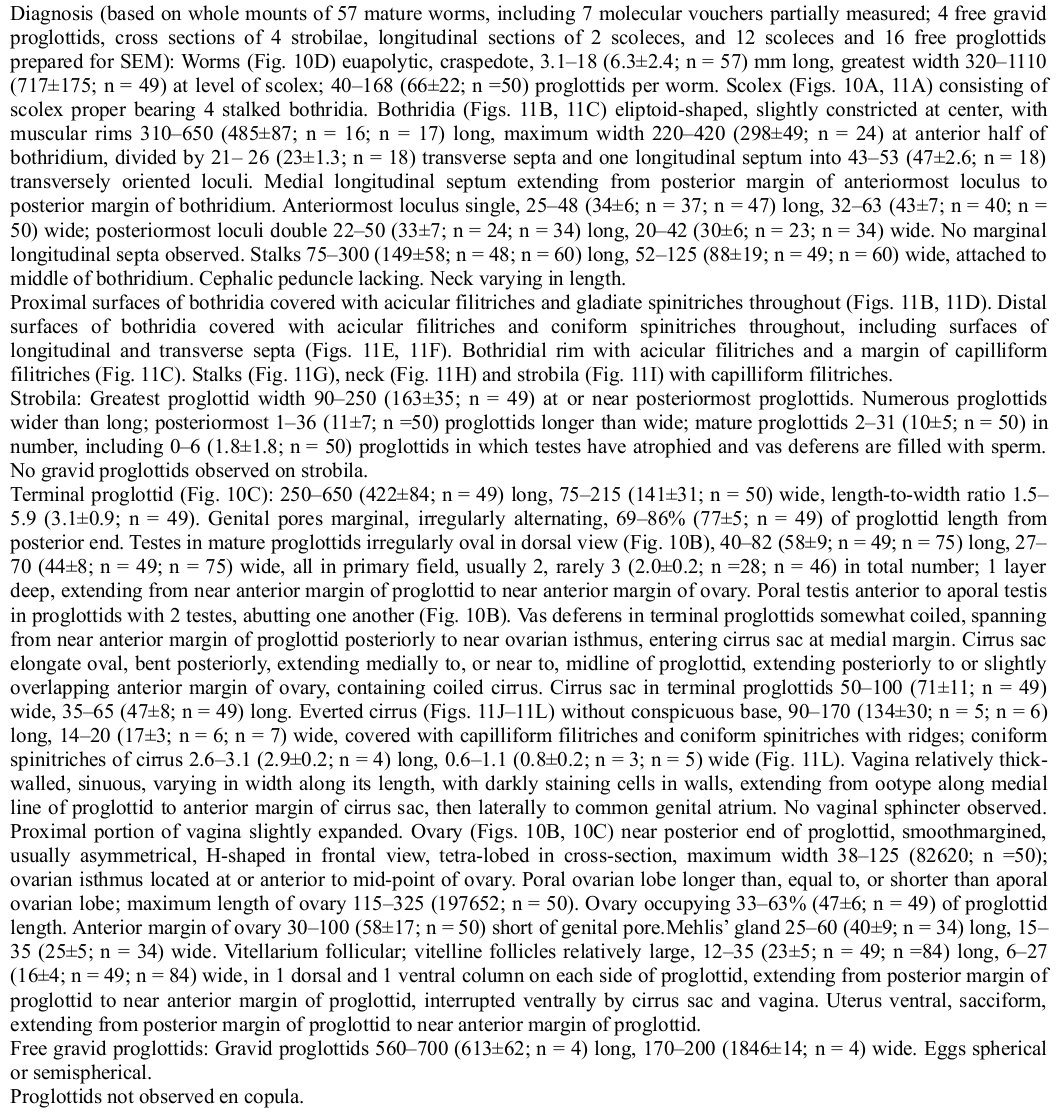
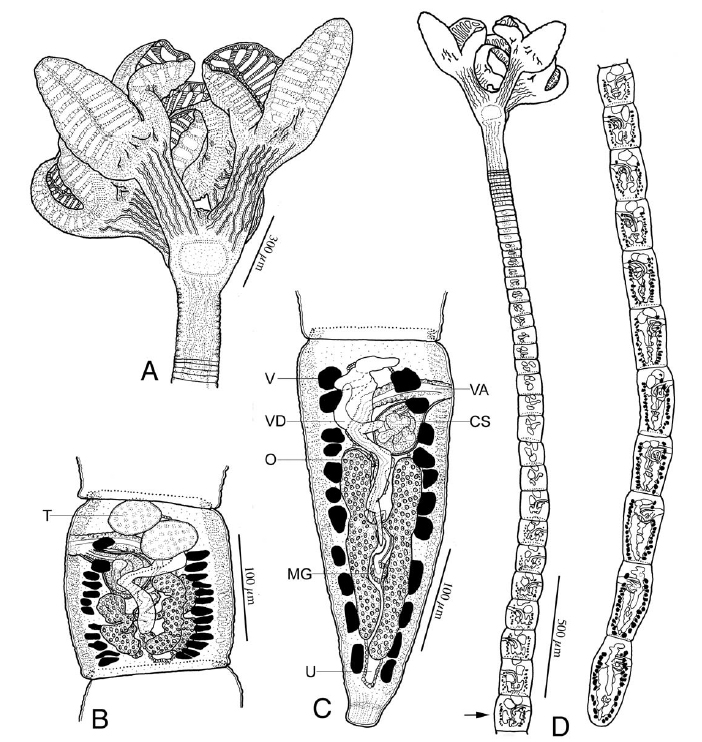 Figure 10. Line drawings of Rhinebothrium fulbrighti n. sp. A. Scolex of Holotype (MZUSP 6309c). B. Subterminal mature proglottid of Paratype
(USNPC 104730). C. Terminal mature proglottid of Paratype (USNPC 104730). D. Anterior and posterior portions of whole worm (Holotype, MZUSP
6309c). Arrow indicates anterior most mature proglottid. Abbreviations: CS, Cirrus sac; MG, Mehlis’ gland; O, Ovary; T, Testes; U, Uterus; V, Vitellaria; VA
Vagina; VD, vas deferens.
doi:10.1371/journal.pone.0022604.g010
Figure 10. Line drawings of Rhinebothrium fulbrighti n. sp. A. Scolex of Holotype (MZUSP 6309c). B. Subterminal mature proglottid of Paratype
(USNPC 104730). C. Terminal mature proglottid of Paratype (USNPC 104730). D. Anterior and posterior portions of whole worm (Holotype, MZUSP
6309c). Arrow indicates anterior most mature proglottid. Abbreviations: CS, Cirrus sac; MG, Mehlis’ gland; O, Ovary; T, Testes; U, Uterus; V, Vitellaria; VA
Vagina; VD, vas deferens.
doi:10.1371/journal.pone.0022604.g010 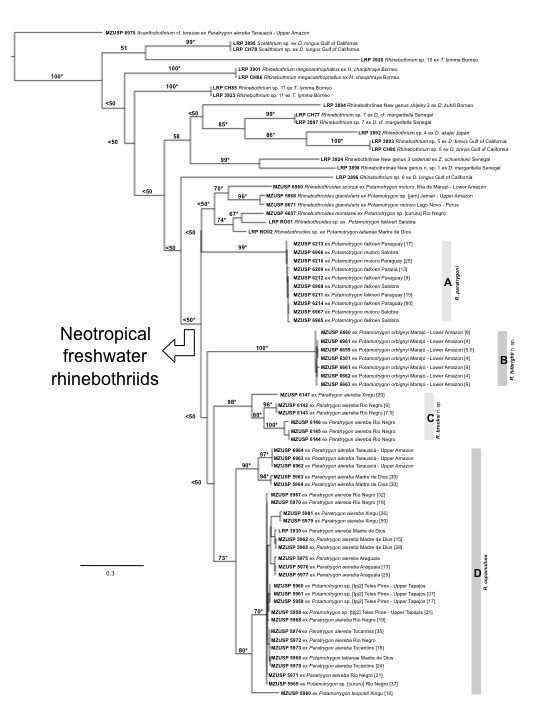 Figure 2. Best-scoring ML tree (2lnL = 7193.942769) based on COI data from marine and freshwater rhinebothriids. Numbers on
internal branches denote nodal support as inferred by Bootstrap Proportions based on 5,000 replicates. *, indicates nodes recovered during
phylogenetic analysis under parsimony. Numbers between square brackets in front of terminals represent total length in millimeters for those
specimens measured. Scale indicates expected number of substitution per site.
doi:10.1371/journal.pone.0022604.g002
Figure 2. Best-scoring ML tree (2lnL = 7193.942769) based on COI data from marine and freshwater rhinebothriids. Numbers on
internal branches denote nodal support as inferred by Bootstrap Proportions based on 5,000 replicates. *, indicates nodes recovered during
phylogenetic analysis under parsimony. Numbers between square brackets in front of terminals represent total length in millimeters for those
specimens measured. Scale indicates expected number of substitution per site.
doi:10.1371/journal.pone.0022604.g002 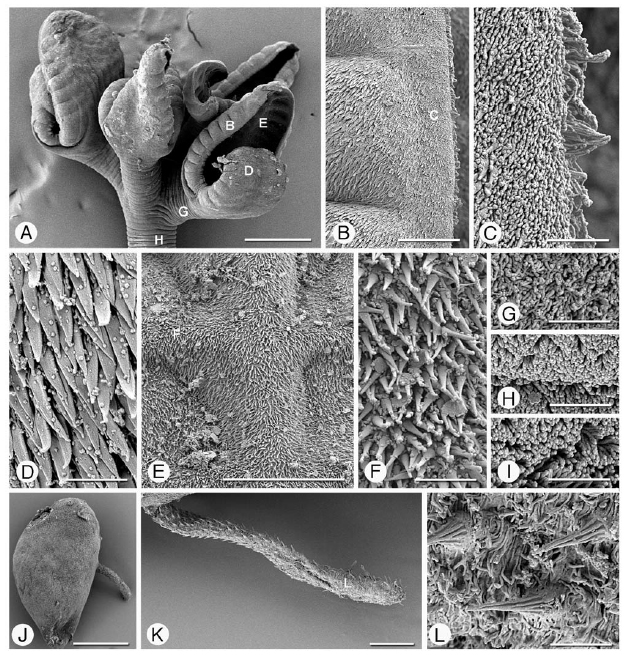 Figure 11. Scanning electron micrographs of Rhinebothrium fulbrighti n. sp. Scolex, Figures A–I. Scolex. A. Scolex. Small letters indicate
locations of details shown in B, D–E, G–H. B. Proximal surface of rim of bothridium. Small letter indicates location of details shown in C. C. Proximal
bothridial surface near bothridial rim. D. Proximal bothridial surface. E. Transverse septum on distal bothridial surface. Small letter indicates location of
detail shown in F. F. Transverse septum on distal bothridial surface. G. Stalk surface. H. Cephalic peduncle. I. Strobila surface. Cirrus, Figures J–L. J. Free
proglottid with everted cirrus. K. Everted cirrus. Small letter indicates location of detail shown in L. L. Coniform spinitriches with ridges and filitriches
on cirrus. Scale bars: A, 100 mm; B, 10 mm; C–D, 2 mm; E, 20 mm; F–I, 2 mm; J, 100 mm; K, 20 mm; L, 2 mm.
doi:10.1371/journal.pone.0022604.g011
Figure 11. Scanning electron micrographs of Rhinebothrium fulbrighti n. sp. Scolex, Figures A–I. Scolex. A. Scolex. Small letters indicate
locations of details shown in B, D–E, G–H. B. Proximal surface of rim of bothridium. Small letter indicates location of details shown in C. C. Proximal
bothridial surface near bothridial rim. D. Proximal bothridial surface. E. Transverse septum on distal bothridial surface. Small letter indicates location of
detail shown in F. F. Transverse septum on distal bothridial surface. G. Stalk surface. H. Cephalic peduncle. I. Strobila surface. Cirrus, Figures J–L. J. Free
proglottid with everted cirrus. K. Everted cirrus. Small letter indicates location of detail shown in L. L. Coniform spinitriches with ridges and filitriches
on cirrus. Scale bars: A, 100 mm; B, 10 mm; C–D, 2 mm; E, 20 mm; F–I, 2 mm; J, 100 mm; K, 20 mm; L, 2 mm.
doi:10.1371/journal.pone.0022604.g011