Global Cestode Database
Cestode Scientific Name
| Species ID | 4750 |
|---|---|
| Order | Trypanorhyncha |
| Family | Pseudotobothriidae |
| Subfamily | |
| Genus | Pseudotobothrium |
| Species | arii |
| Authority | (Bilqees & Shaukat, 1976) Beveridge, Campbell & Jones, 2000 |
| Taxonomic Status | Valid |
| Valid Name | |
| Synonyms | Otobothrium arii Bilqees & Shaukut, 1976 Otobothrium megatentaculum Bilqees & Kurshid, 1987 |
| Genus Record | No |
| Type Species | No |
| Verified | Yes |
| Verified By | I. Beveridge |
| Citation(s) |
Bilqees, F.M. and N. Shaukat. 1976. Otobothrium arii sp. n. in the fish Arius serratus (Day) from Karachi coast. Agriculture Pakistan 27: 119-124. (4316) Download PDFBeveridge, I., R. A. Campbell, and M. K. Jones. 2000. New records of the cestode genus Pseudotobothrium (Trypnaorhyncha: Otobothriidae) from Australian fishes. Transactions of the Royal Society of South Australia 124(2): 151-162. (4317) Download PDF |
| Redescription |
Schaeffner, B. C. and I. Beveridge. 2013. Pristiorhynchus palmi n. g., n. sp. (Cestoda: Trypanorhyncha) from sawfishes (Pristidae) off Australia, with redescriptions and new records of six species of the Otobothrioidea Dollfus, 1942. Systematic Parasitology 84(2): 97-121. (6074) Download PDF |
| Scientific Name Notes |
Record Data
| Date (MM/DD/YYYY) | Action | User Name |
|---|---|---|
| 11/30/-0001 | Created | I. Beveridge |
| 03/01/2010 | Modified | |
| 06/02/2015 | Modified | I. Beveridge |
| 11/05/2015 | Modified | N. Arisco |
| 08/17/2017 | Modified | K. Herzog |
| 08/18/2017 | Modified | K. Herzog |
Type Host
| Host Class | Actinopterygii | ||||||
|---|---|---|---|---|---|---|---|
| Host Order | Siluriformes | ||||||
| Host Family | Ariidae | ||||||
|
Type Host (Literal) |
|
||||||
|
Type Host (Valid) |
|
||||||
| Additional Host(s) | |||||||
| Site in Host | head muscles and visceral mesentries | ||||||
| Host Notes | See redescriptions in Beveridge et al. (2000) and Schaeffner & Beveridge (2013) for additional hosts |
Type Locality
| Country | Pakistan |
|---|---|
| Body of Water | Arabian Sea |
| Island(s) | |
| City/Region | Karachi |
| Coordinates | |
| DD Latitude | |
| DD Longitude | |
| Additional Localities | |
| Locality Notes | See redescriptions in Beveridge et al. (2000) and Schaeffner & Beveridge (2013) for additional localities |
Specimens
| Type Material | DZUK (holotype); BMNH 1989.5.18.14 (topotype) |
|---|---|
| Total Number of Type Specimens | |
| Voucher Material | |
| Specimen Notes | SAM 28271, 28266 (vouchers from redescription by Beveridge et al. [2000]) |
Data are given as in original description unless otherwise indicated.

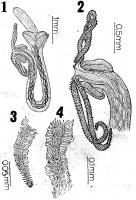
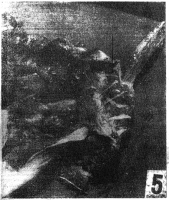
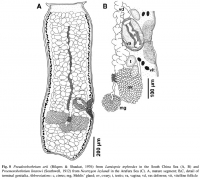
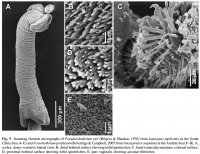
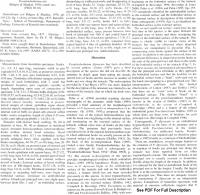
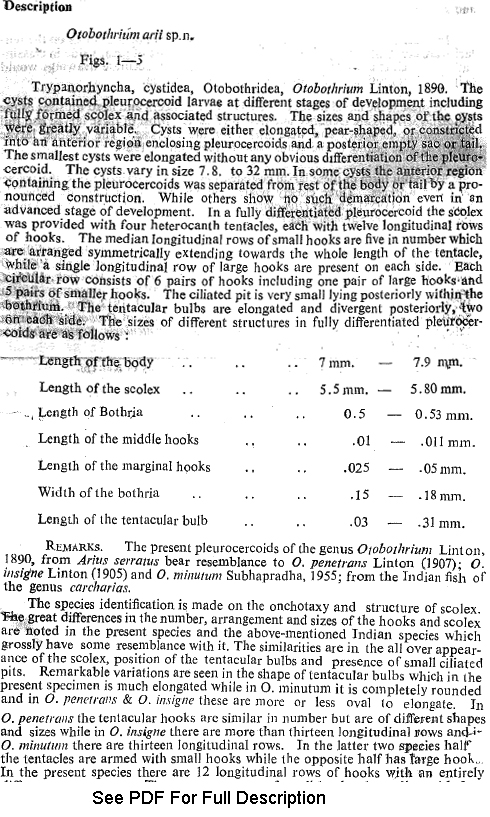
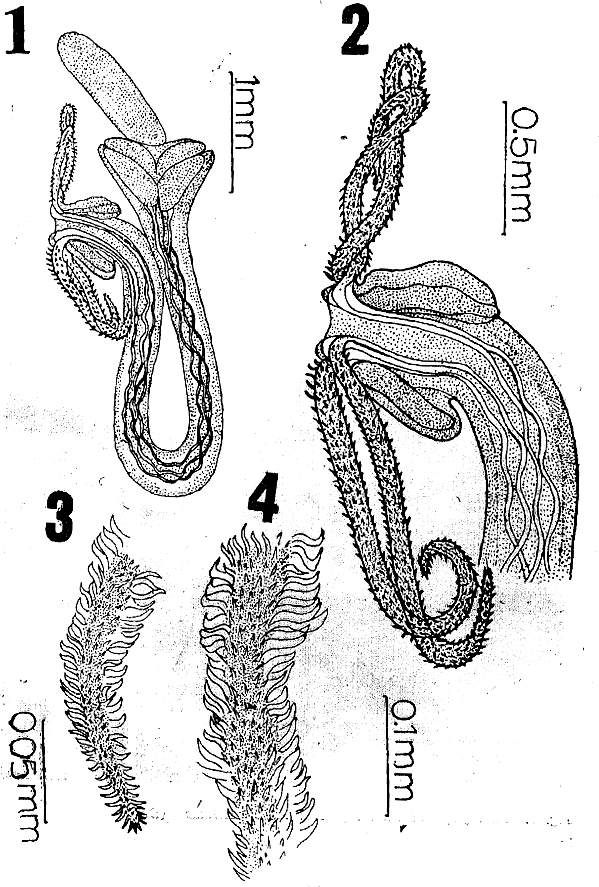 Fig. 1. Fully developed pleurocercoides. Fig. 2. Scolex and associate structures. Fig. 3. Proboscis hooks in the anterior region & tip of tentacle. Fig. 4. Proboscis hooks from the middle region of tentacle.
 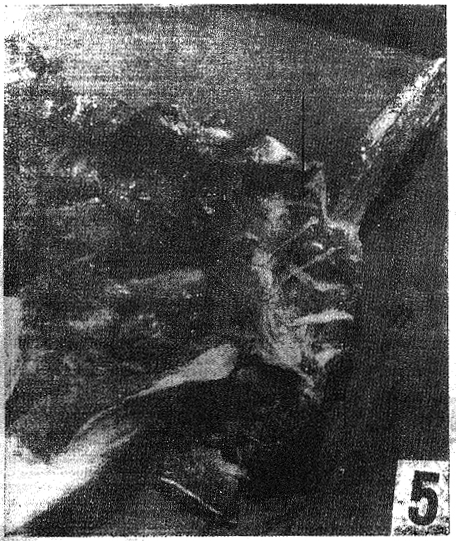 Fig. 5. Photograph of head region of Arius serratus (Day) Showing the encysted pleurocercoides of Otobothrium arii sp. n.
 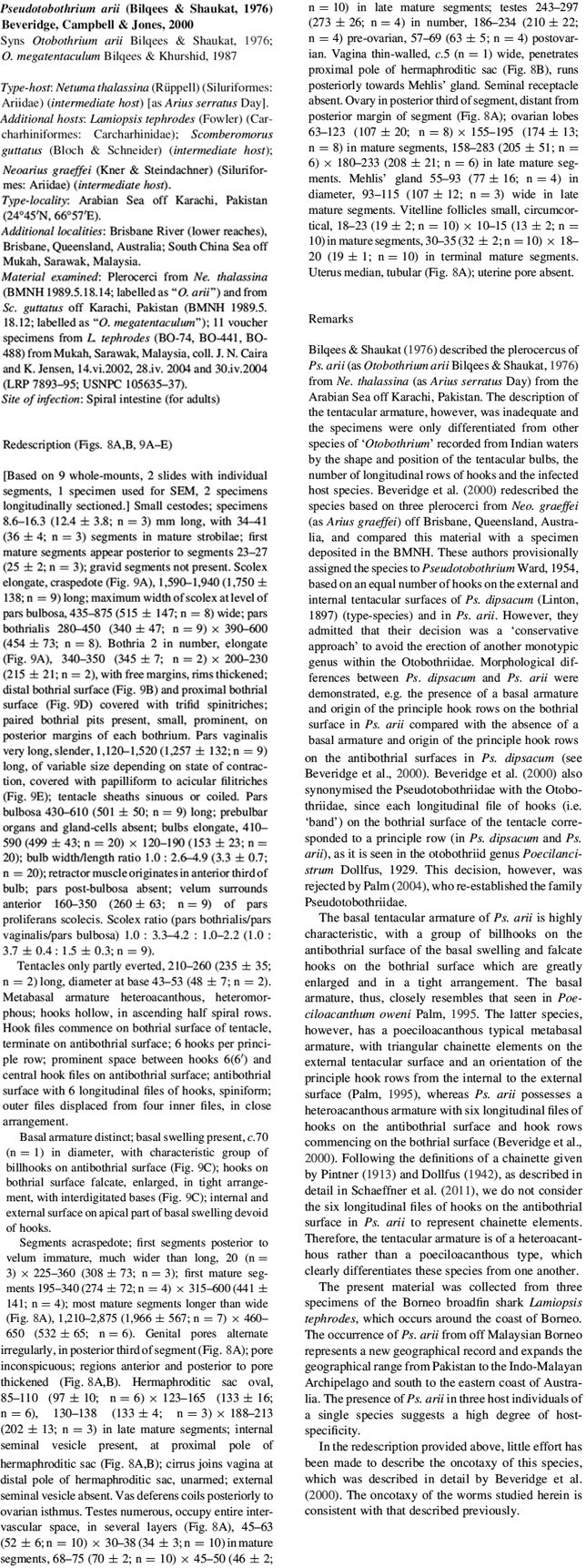 Schaeffner & Beveridge (2013), pg. 111
 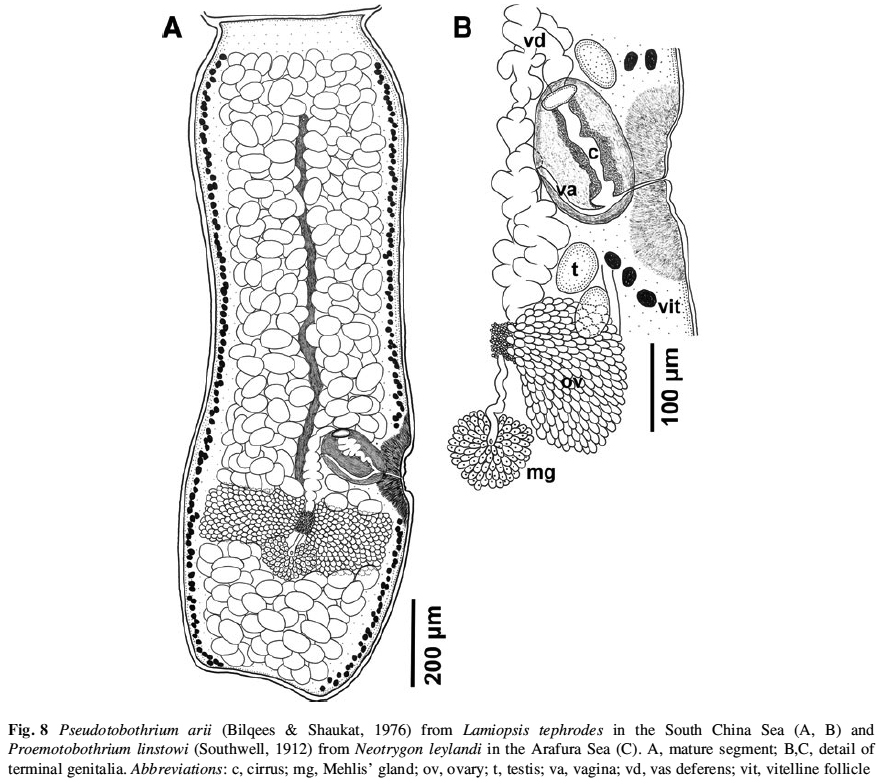 Fig. 8 Pseudotobothrium arii (Bilqees & Shaukat, 1976) from Lamiopsis tephrodes in the South China Sea (A, B) A, mature segment; B, detail of terminal genitalia. Abbreviations: c, cirrus; mg, Mehlis’ gland; ov, ovary; t, testis; va, vagina; vd, vas deferens; vit, vitelline follicle
 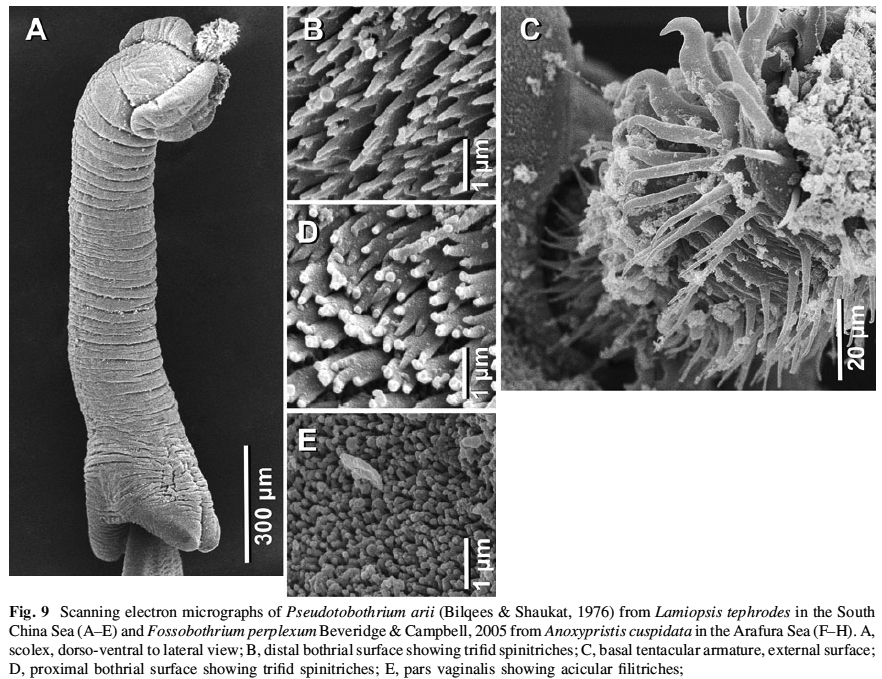 Fig. 9 Scanning electron micrographs of Pseudotobothrium arii (Bilqees & Shaukat, 1976) from Lamiopsis tephrodes in the South
China Sea (A–E). A, scolex, dorso-ventral to lateral view; B, distal bothrial surface showing trifid spinitriches; C, basal tentacular armature, external surface; D, proximal bothrial surface showing trifid spinitriches; E, pars vaginalis showing acicular filitriches.
Fig. 9 Scanning electron micrographs of Pseudotobothrium arii (Bilqees & Shaukat, 1976) from Lamiopsis tephrodes in the South
China Sea (A–E). A, scolex, dorso-ventral to lateral view; B, distal bothrial surface showing trifid spinitriches; C, basal tentacular armature, external surface; D, proximal bothrial surface showing trifid spinitriches; E, pars vaginalis showing acicular filitriches. 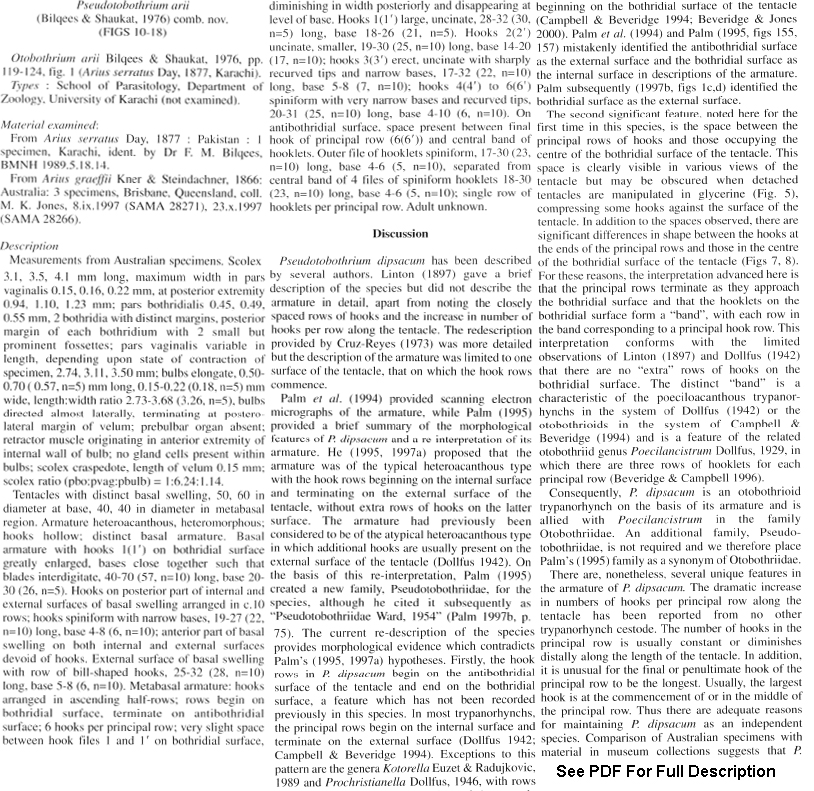 Beveridge, Campbell & Jones, 2000, pg. 158
 Best viewed in Firefox