Line Drawing 1
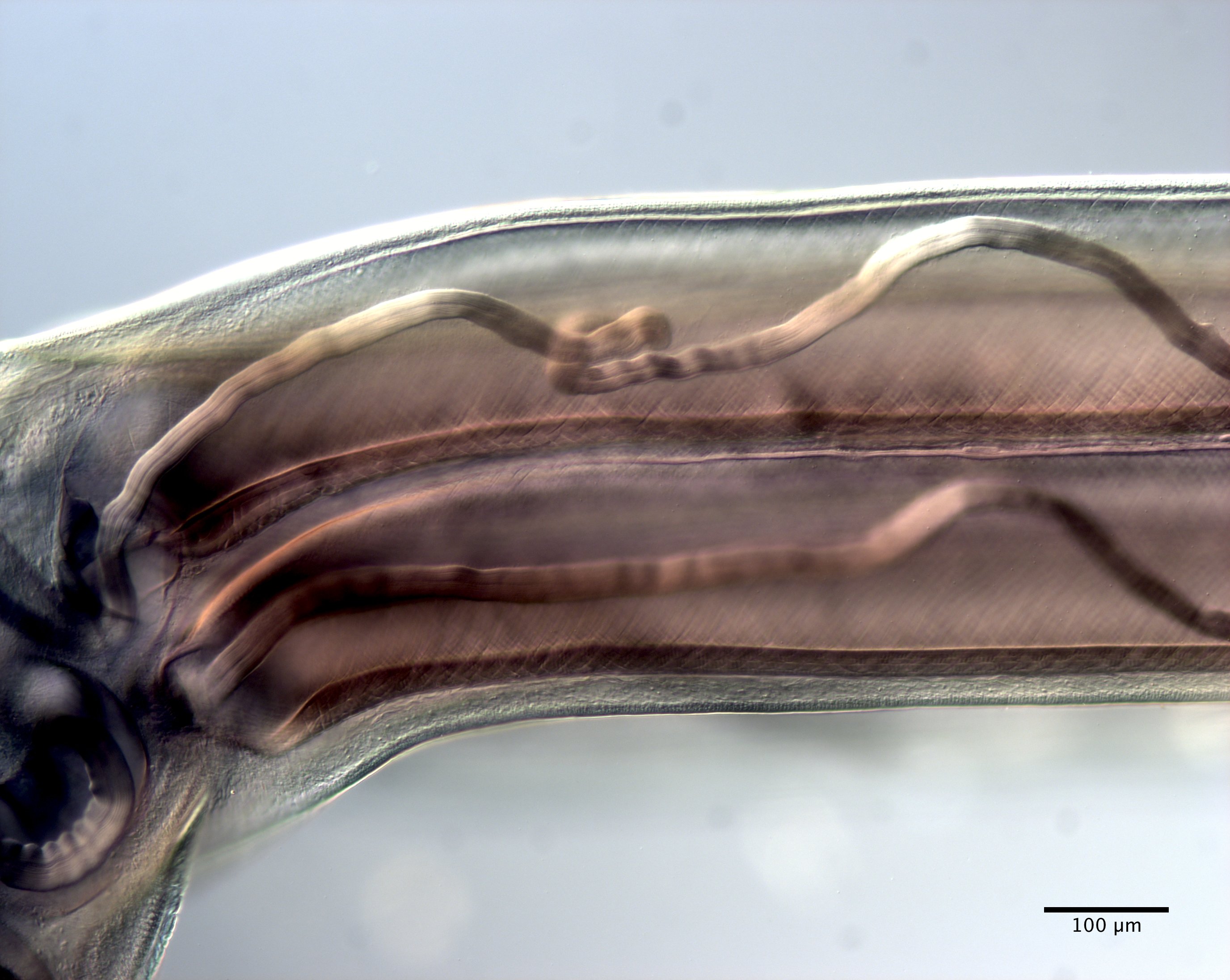
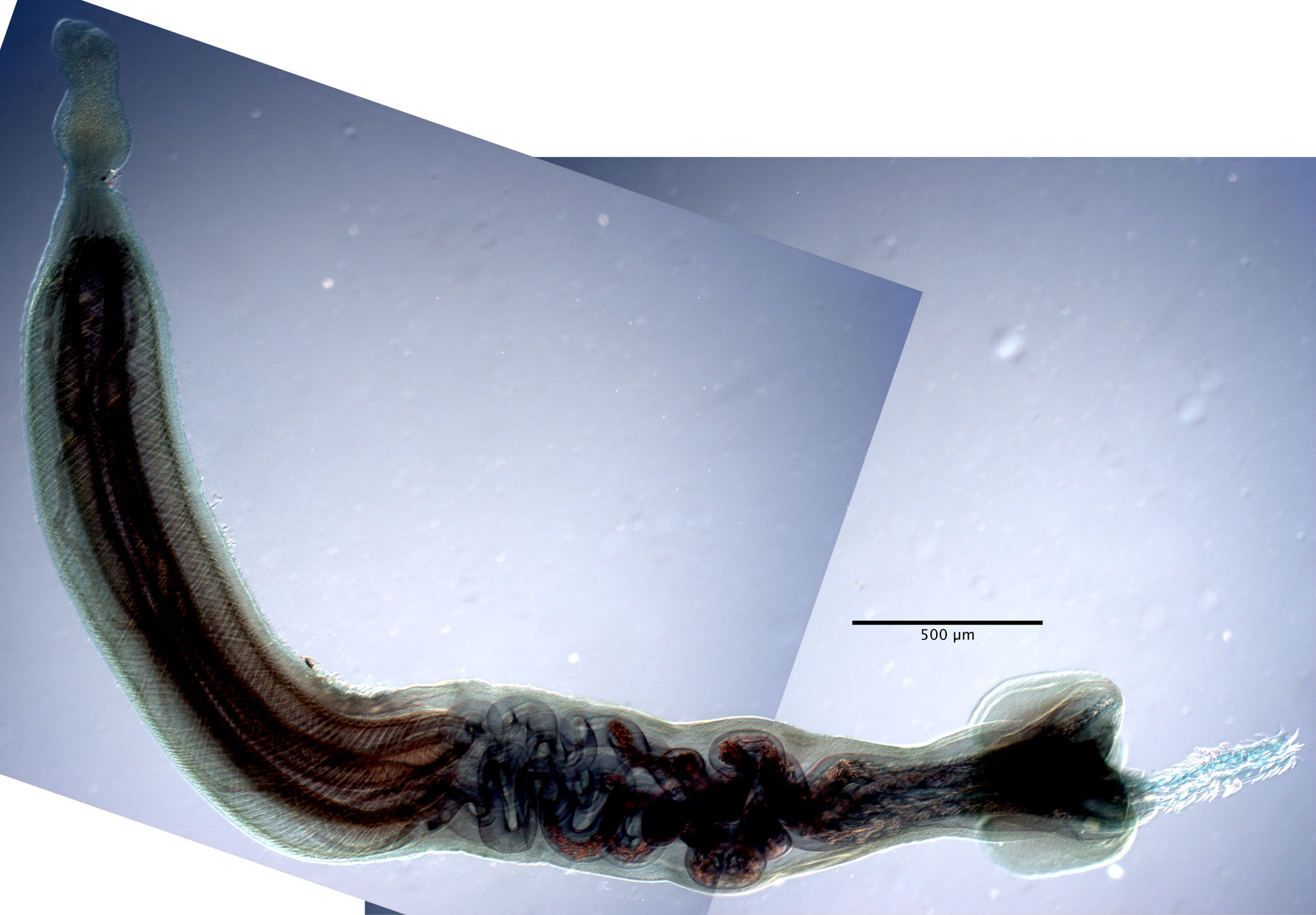
Fig. 1 Line drawings of Shirleyrhynchus panamensis n. sp. ex Urotrygon aspidura (Jordan & Gilbert) (PN15-44: A; PN15-46: B–D) from the Golfo de Montijo, Panama. A, Entire specimen, lateral view; B, Pa... MoreFig. 1 Line drawings of Shirleyrhynchus panamensis n. sp. ex Urotrygon aspidura (Jordan & Gilbert) (PN15-44: A; PN15-46: B–D) from the Golfo de Montijo, Panama. A, Entire specimen, lateral view; B, Pars bothrialis, showing two, ovate bothria, dorso-ventral view; C, Bulb; D, Detail of anterior part of bulb |
Line Drawing 2
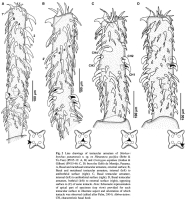
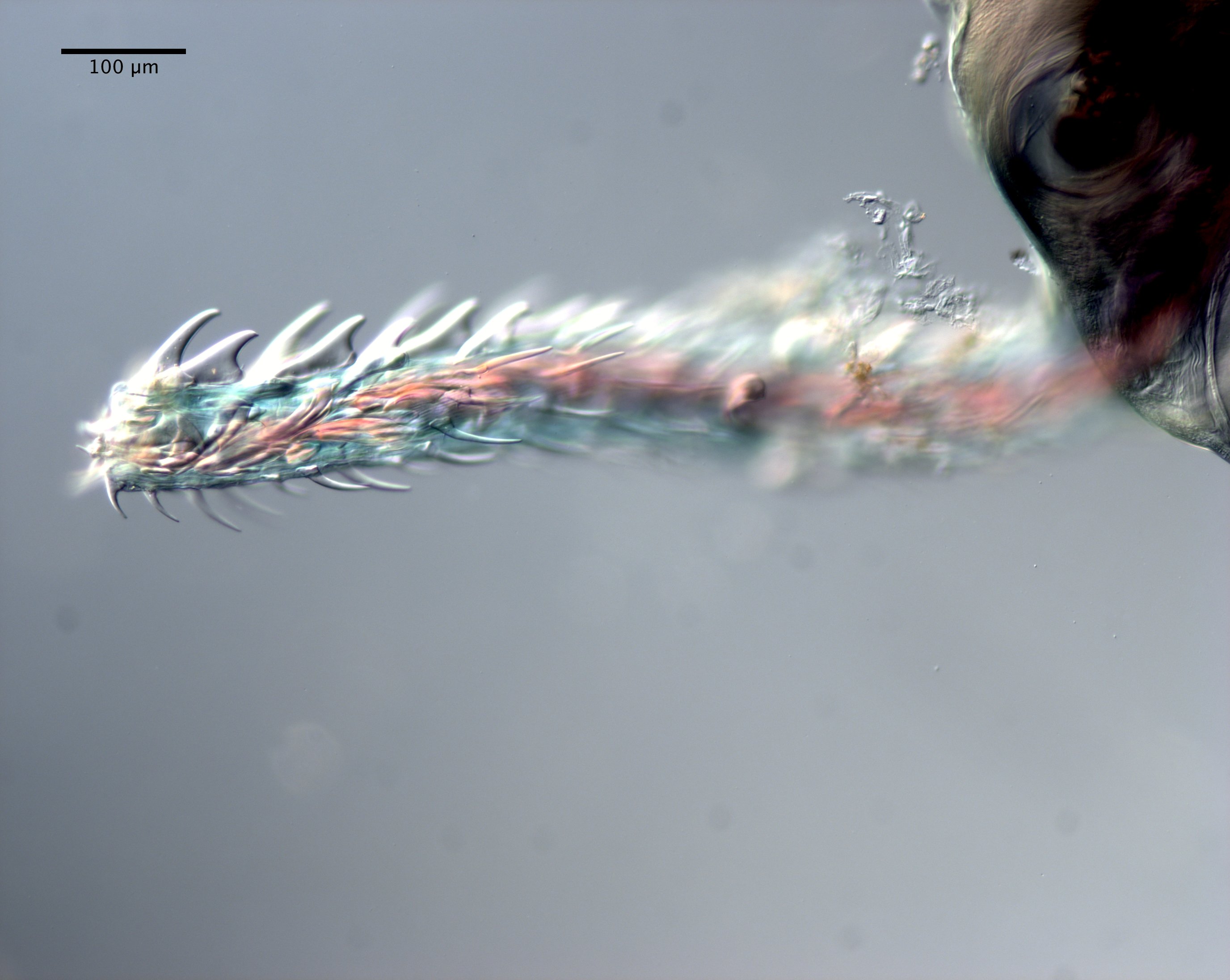
Fig. 2 Line drawings of tentacular armature of Shirleyrhynchus panamensis n. sp. ex Himantura pacifica (Bebe & TeVan) (PN15-12: A, B) and Urotrygon aspidura (Jordan & Gilbert) (PN15-46: C, D) from the... MoreFig. 2 Line drawings of tentacular armature of Shirleyrhynchus panamensis n. sp. ex Himantura pacifica (Bebe & TeVan) (PN15-12: A, B) and Urotrygon aspidura (Jordan & Gilbert) (PN15-46: C, D) from the Golfo de Montijo, Panama. A, Basal and metabasal tentacular armature, external surface; B, Basal and metabasal tentacular armature, internal (left) to antibothrial surface (right); C, Basal tentacular armature, internal (left) to antibothrial surface (right); D, Basal tentacular armature, bothrial (left) to external surface (right), opposing surface to (C) of same tentacle. Note: Schematic representation of apical part of specimen (top view) provided for each tentacular surface to illustrate aspect and orientation of which tentacle was observed (edited after Palm, 2004). Abbreviation: CH, characteristic basal hook |
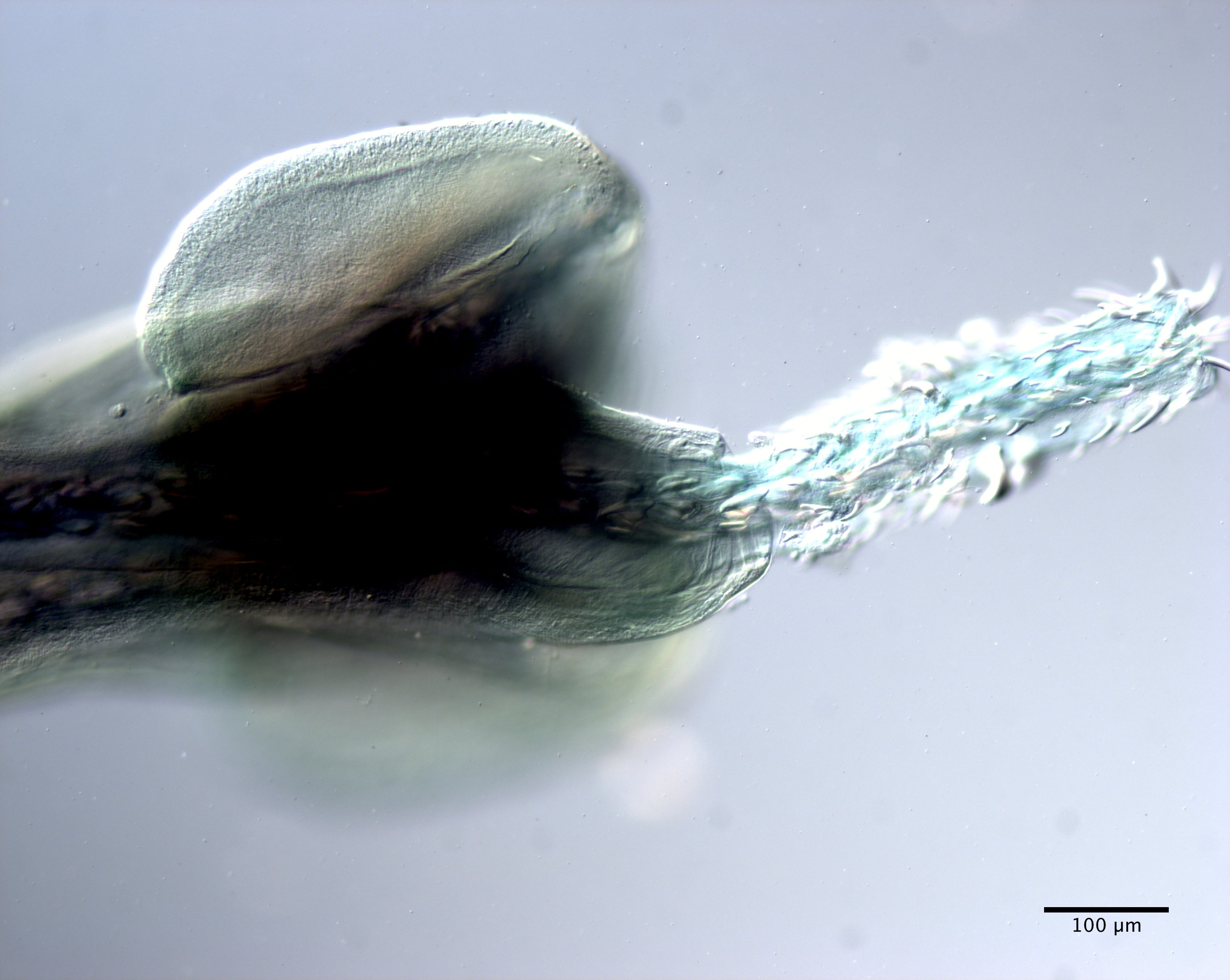
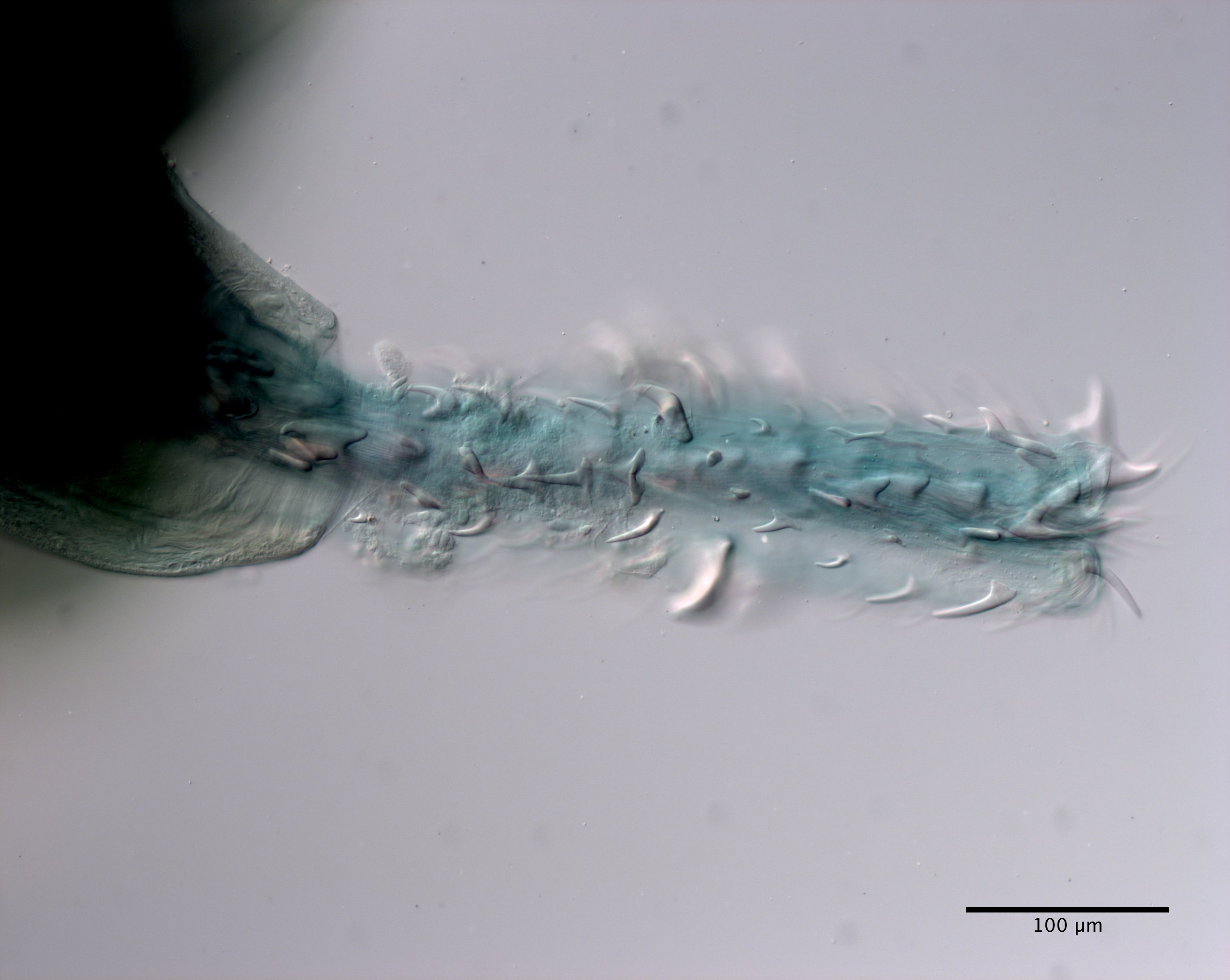
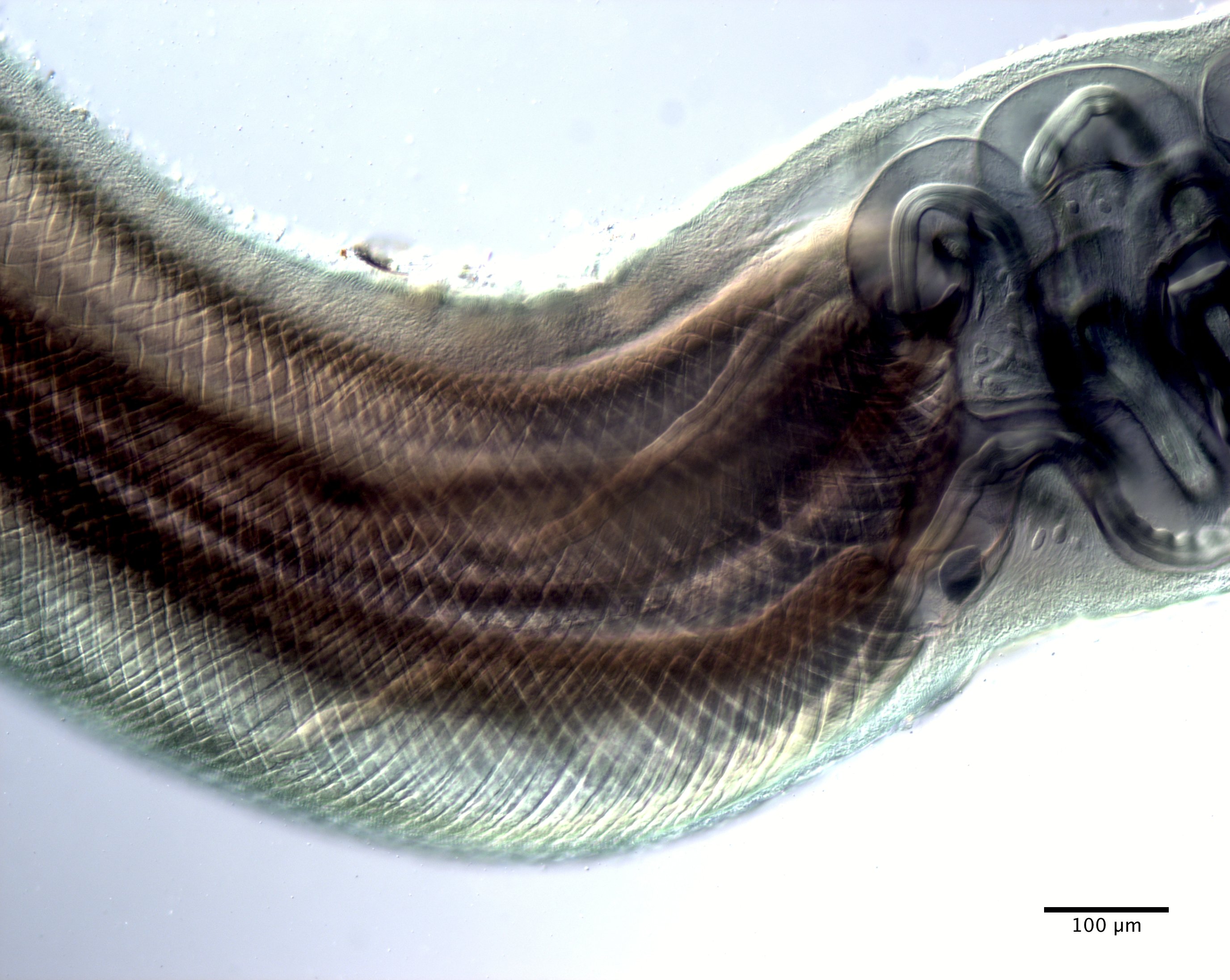
Photo Micrograph
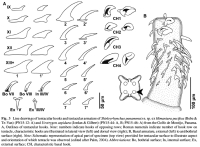
Fig. 3 Line drawings of tentacular hooks and tentacular armature of Shirleyrhynchus panamensis n. sp. ex Himantura pacifica (Bebe & Te-Van) (PN15-12: A) and Urotrygon aspidura (Jordan & Gilbert) (PN15... MoreFig. 3 Line drawings of tentacular hooks and tentacular armature of Shirleyrhynchus panamensis n. sp. ex Himantura pacifica (Bebe & Te-Van) (PN15-12: A) and Urotrygon aspidura (Jordan & Gilbert) (PN15-44: A, B; PN15-46: A) from the Golfo de Montijo, Panama. A, Outlines of tentacular hooks. Note: numbers indicate hooks of opposing rows; Roman numerals indicate number of hook row on tentacle, characteristic hooks are illustrated in lateral view (left) and dorsal view (right); B, Basal armature, external (left) to antibothrial surface (right). Note: Schematic representation of apical part of specimen (top view) provided for tentacular surface to illustrate aspect and orientation of which tentacle was observed (edited after Palm, 2004). Abbreviations: Bo, bothrial surface; In, internal surface; Ex, external surface; CH, characteristic basal hook. |
Scanning Electron Micrograph
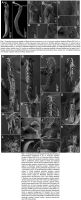
Fig. 4 Scanning electron micrographs of Shirleyrhynchus panamensis n. sp. ex Urotrygon aspidura (Jordan & Gilbert) (PN15-45: A–J) from the Golfo de Montijo, Panama. A, Entire specimen, dorso-ventral v... MoreFig. 4 Scanning electron micrographs of Shirleyrhynchus panamensis n. sp. ex Urotrygon aspidura (Jordan & Gilbert) (PN15-45: A–J) from the Golfo de Montijo, Panama. A, Entire specimen, dorso-ventral view; B, Entire specimen, lateral view; C, Anterior part of scolex, dorso-ventral view, showing narrow, ovate bothria; D, Anterior part of scolex, lateral view; E, Gladiate spinitriches covering distal bothrial surface; F, Acicular to capilliform filitriches covering proximal bothrial surface; G, Gladiate spinitriches covering distal
bothrial surface, detailed view; H, Acicular to capilliform filitriches covering pars bothrialis between bothrial pairs in lateral view; I, Gladiate spinitriches and capilliform filitriches covering pars bothrialis between bothria in dorso-ventral view; J, Capilliform filitriches covering pars vaginalis and pars bulbosa, detailed view. Fig. 5 Scanning electronmicrographs of tentacular armature ofc
Shirleyrhynchus panamensis n. sp. ex Urotrygon aspidura (Jordan & Gilbert) (PN15-45: A–J) from the Golfo de Montijo, Panama. A, Basal and metabasal tentacular armature, external (left) to antibothrial surface (right); B, Basal and metabasal tentacular armature, internal (left) to bothrial surface (right); C, Basal tentacular armature, internal (left) to antibothrial surface (right); D, Metabasal tentacular armature, bothrial (left) to internal surface (right), showing differently shaped hooks 1 and
10 and hooks 2 and 20; E, Basal tentacular armature, antibothrial surface; F, Distal metabasal tentacular armature, external surface; G, Basal tentacular armature, antibothrial (left) to external surface (right); H, Metabasal tentacular armature, internal surface, showing hooks 1 and 10 only slightly separated; I, Detailed view of basal tentacular armature, external surface, showing characteristic hooks CH1 (lower) and CH2 (upper); J,
Detailed view of basal tentacular armature, internal surface, showing characteristic hooks CH3 (lower) and CH4 (upper); K, Detailed view of basal tentacular armature, external surface, showing characteristic hooks CH1 (lower), CH2 (middle) and
CH4 (top, unfolding towards internal surface) (side profiles); L, Detailed view on apical part of tentacle, showing characteristic hooks in opposite arrangement; M, Detailed view of basal
armature, bothrial tentacular surface, showing enlarged, falcate hooks with recurved tips (side profile); N, Detailed view of basal tentacular armature, internal surface, showing characteristic
hook CH4 (side profile) |
 Global Cestode Database
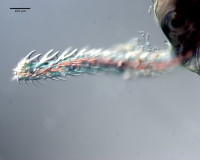
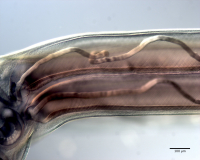
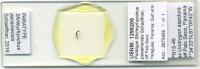
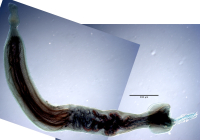
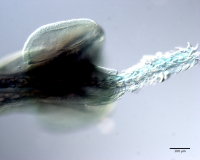
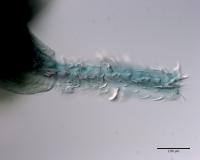
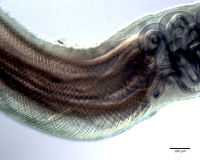
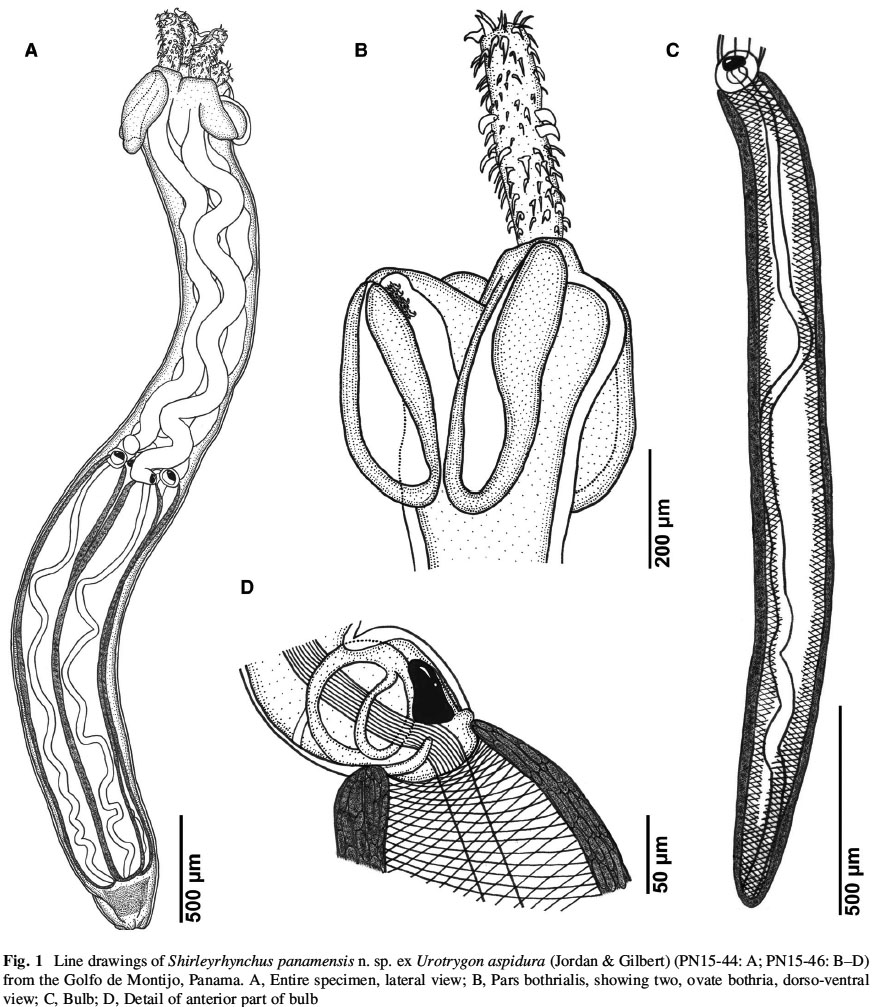 Fig. 1 Line drawings of Shirleyrhynchus panamensis n. sp. ex Urotrygon aspidura (Jordan & Gilbert) (PN15-44: A; PN15-46: B–D) from the Golfo de Montijo, Panama. A, Entire specimen, lateral view; B, Pars bothrialis, showing two, ovate bothria, dorso-ventral view; C, Bulb; D, Detail of anterior part of bulb
 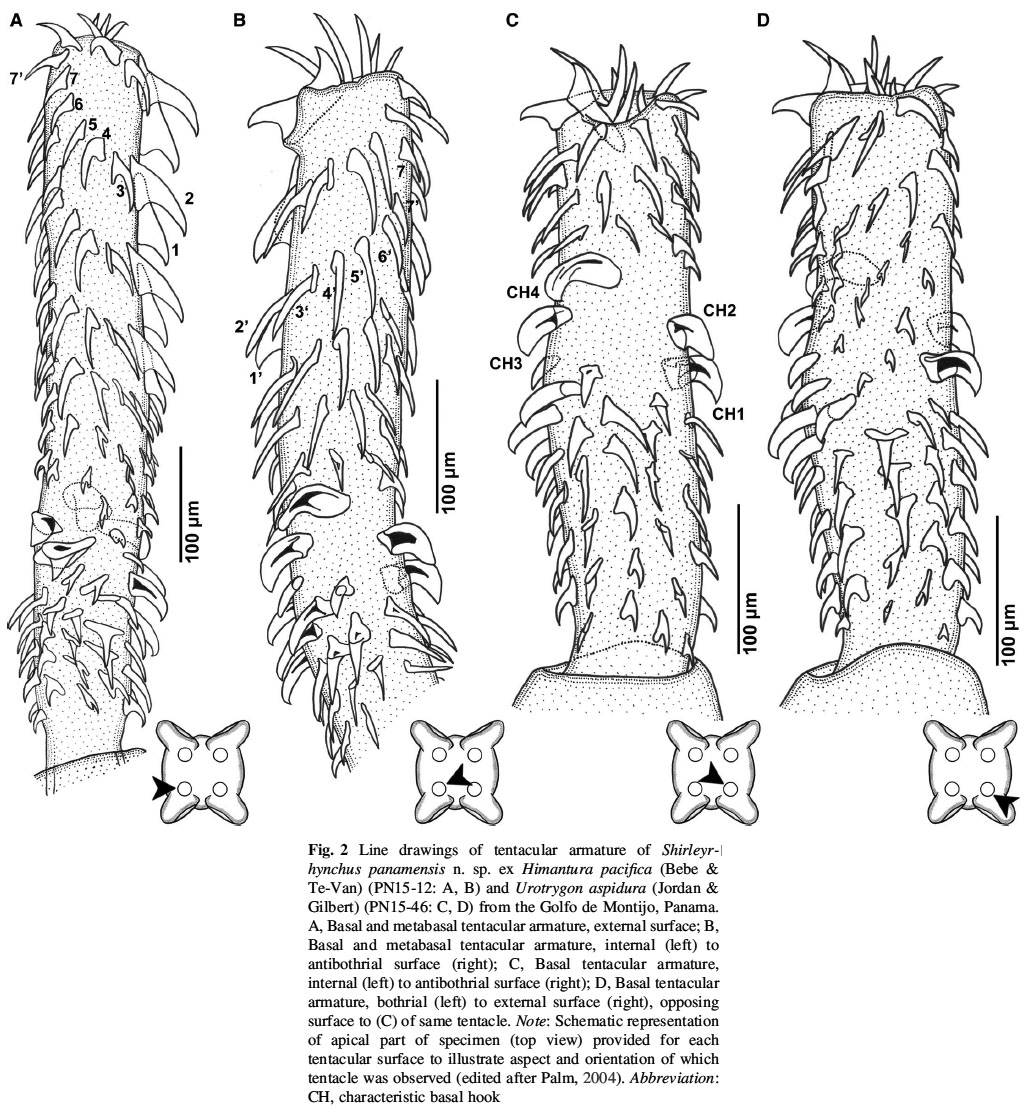 Fig. 2 Line drawings of tentacular armature of Shirleyrhynchus panamensis n. sp. ex Himantura pacifica (Bebe & TeVan) (PN15-12: A, B) and Urotrygon aspidura (Jordan & Gilbert) (PN15-46: C, D) from the Golfo de Montijo, Panama. A, Basal and metabasal tentacular armature, external surface; B, Basal and metabasal tentacular armature, internal (left) to antibothrial surface (right); C, Basal tentacular armature, internal (left) to antibothrial surface (right); D, Basal tentacular armature, bothrial (left) to external surface (right), opposing surface to (C) of same tentacle. Note: Schematic representation of apical part of specimen (top view) provided for each tentacular surface to illustrate aspect and orientation of which tentacle was observed (edited after Palm, 2004). Abbreviation: CH, characteristic basal hook
 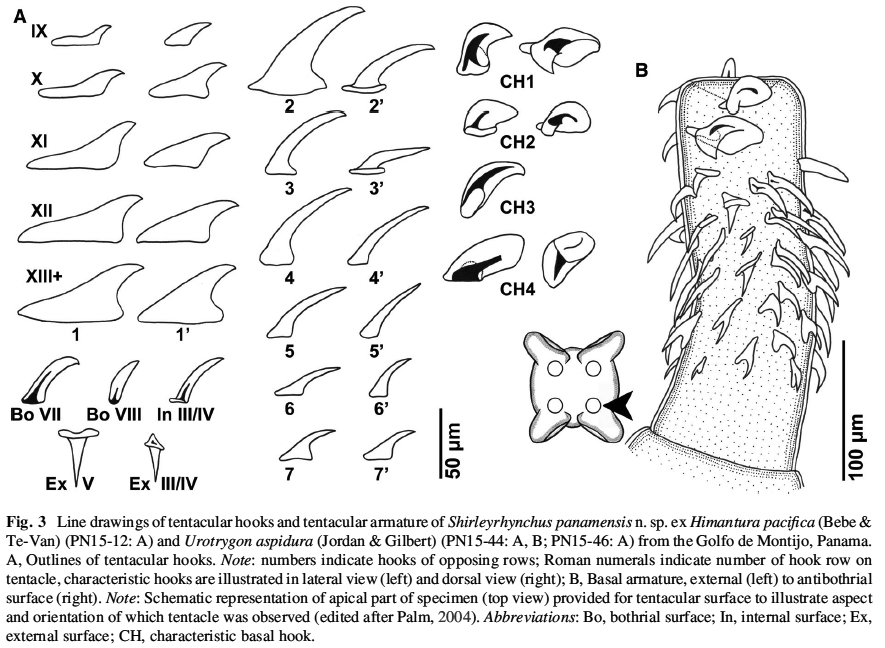 Fig. 3 Line drawings of tentacular hooks and tentacular armature of Shirleyrhynchus panamensis n. sp. ex Himantura pacifica (Bebe & Te-Van) (PN15-12: A) and Urotrygon aspidura (Jordan & Gilbert) (PN15-44: A, B; PN15-46: A) from the Golfo de Montijo, Panama. A, Outlines of tentacular hooks. Note: numbers indicate hooks of opposing rows; Roman numerals indicate number of hook row on tentacle, characteristic hooks are illustrated in lateral view (left) and dorsal view (right); B, Basal armature, external (left) to antibothrial surface (right). Note: Schematic representation of apical part of specimen (top view) provided for tentacular surface to illustrate aspect and orientation of which tentacle was observed (edited after Palm, 2004). Abbreviations: Bo, bothrial surface; In, internal surface; Ex, external surface; CH, characteristic basal hook.
 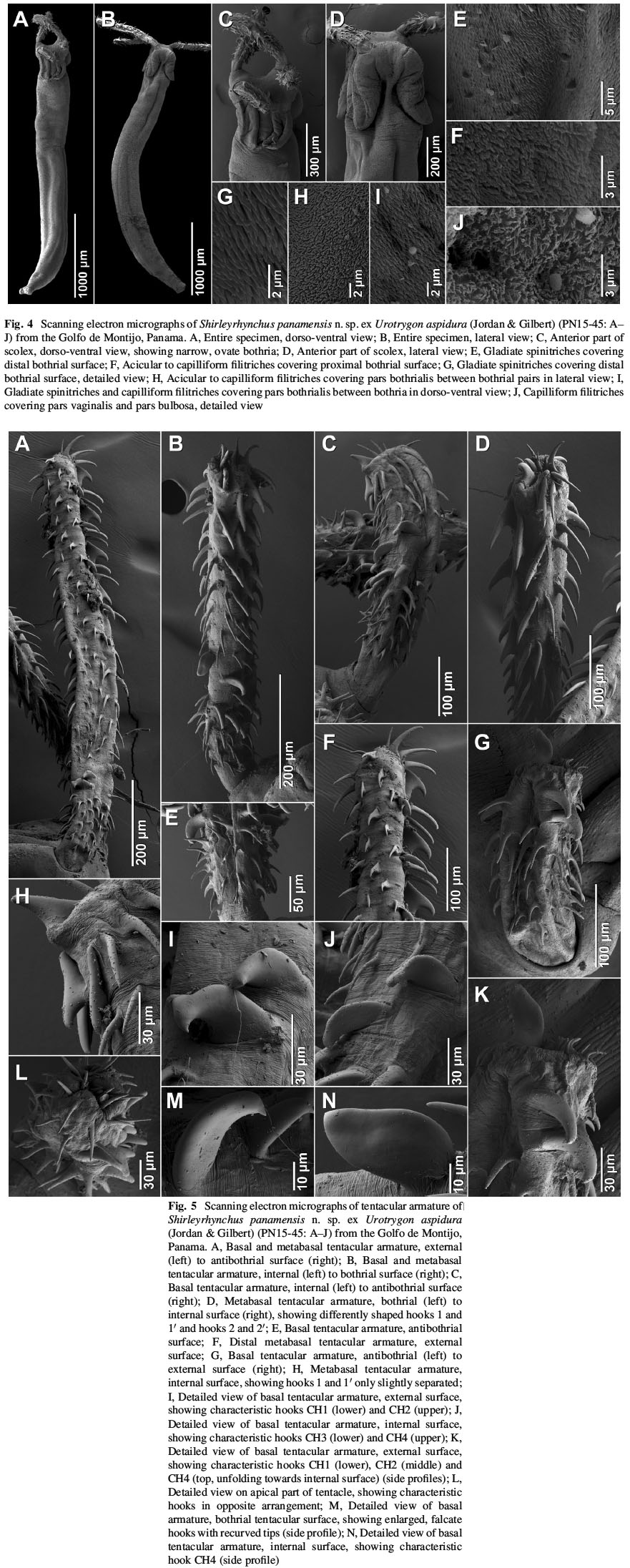 Fig. 4 Scanning electron micrographs of Shirleyrhynchus panamensis n. sp. ex Urotrygon aspidura (Jordan & Gilbert) (PN15-45: A–J) from the Golfo de Montijo, Panama. A, Entire specimen, dorso-ventral view; B, Entire specimen, lateral view; C, Anterior part of scolex, dorso-ventral view, showing narrow, ovate bothria; D, Anterior part of scolex, lateral view; E, Gladiate spinitriches covering distal bothrial surface; F, Acicular to capilliform filitriches covering proximal bothrial surface; G, Gladiate spinitriches covering distal
bothrial surface, detailed view; H, Acicular to capilliform filitriches covering pars bothrialis between bothrial pairs in lateral view; I, Gladiate spinitriches and capilliform filitriches covering pars bothrialis between bothria in dorso-ventral view; J, Capilliform filitriches covering pars vaginalis and pars bulbosa, detailed view. Fig. 5 Scanning electronmicrographs of tentacular armature ofc
Shirleyrhynchus panamensis n. sp. ex Urotrygon aspidura (Jordan & Gilbert) (PN15-45: A–J) from the Golfo de Montijo, Panama. A, Basal and metabasal tentacular armature, external (left) to antibothrial surface (right); B, Basal and metabasal tentacular armature, internal (left) to bothrial surface (right); C, Basal tentacular armature, internal (left) to antibothrial surface (right); D, Metabasal tentacular armature, bothrial (left) to internal surface (right), showing differently shaped hooks 1 and
10 and hooks 2 and 20; E, Basal tentacular armature, antibothrial surface; F, Distal metabasal tentacular armature, external surface; G, Basal tentacular armature, antibothrial (left) to external surface (right); H, Metabasal tentacular armature, internal surface, showing hooks 1 and 10 only slightly separated; I, Detailed view of basal tentacular armature, external surface, showing characteristic hooks CH1 (lower) and CH2 (upper); J,
Detailed view of basal tentacular armature, internal surface, showing characteristic hooks CH3 (lower) and CH4 (upper); K, Detailed view of basal tentacular armature, external surface, showing characteristic hooks CH1 (lower), CH2 (middle) and
CH4 (top, unfolding towards internal surface) (side profiles); L, Detailed view on apical part of tentacle, showing characteristic hooks in opposite arrangement; M, Detailed view of basal
armature, bothrial tentacular surface, showing enlarged, falcate hooks with recurved tips (side profile); N, Detailed view of basal tentacular armature, internal surface, showing characteristic
hook CH4 (side profile)
Fig. 4 Scanning electron micrographs of Shirleyrhynchus panamensis n. sp. ex Urotrygon aspidura (Jordan & Gilbert) (PN15-45: A–J) from the Golfo de Montijo, Panama. A, Entire specimen, dorso-ventral view; B, Entire specimen, lateral view; C, Anterior part of scolex, dorso-ventral view, showing narrow, ovate bothria; D, Anterior part of scolex, lateral view; E, Gladiate spinitriches covering distal bothrial surface; F, Acicular to capilliform filitriches covering proximal bothrial surface; G, Gladiate spinitriches covering distal
bothrial surface, detailed view; H, Acicular to capilliform filitriches covering pars bothrialis between bothrial pairs in lateral view; I, Gladiate spinitriches and capilliform filitriches covering pars bothrialis between bothria in dorso-ventral view; J, Capilliform filitriches covering pars vaginalis and pars bulbosa, detailed view. Fig. 5 Scanning electronmicrographs of tentacular armature ofc
Shirleyrhynchus panamensis n. sp. ex Urotrygon aspidura (Jordan & Gilbert) (PN15-45: A–J) from the Golfo de Montijo, Panama. A, Basal and metabasal tentacular armature, external (left) to antibothrial surface (right); B, Basal and metabasal tentacular armature, internal (left) to bothrial surface (right); C, Basal tentacular armature, internal (left) to antibothrial surface (right); D, Metabasal tentacular armature, bothrial (left) to internal surface (right), showing differently shaped hooks 1 and
10 and hooks 2 and 20; E, Basal tentacular armature, antibothrial surface; F, Distal metabasal tentacular armature, external surface; G, Basal tentacular armature, antibothrial (left) to external surface (right); H, Metabasal tentacular armature, internal surface, showing hooks 1 and 10 only slightly separated; I, Detailed view of basal tentacular armature, external surface, showing characteristic hooks CH1 (lower) and CH2 (upper); J,
Detailed view of basal tentacular armature, internal surface, showing characteristic hooks CH3 (lower) and CH4 (upper); K, Detailed view of basal tentacular armature, external surface, showing characteristic hooks CH1 (lower), CH2 (middle) and
CH4 (top, unfolding towards internal surface) (side profiles); L, Detailed view on apical part of tentacle, showing characteristic hooks in opposite arrangement; M, Detailed view of basal
armature, bothrial tentacular surface, showing enlarged, falcate hooks with recurved tips (side profile); N, Detailed view of basal tentacular armature, internal surface, showing characteristic
hook CH4 (side profile)