Global Cestode Database
Cestode Scientific Name
| Species ID | 14040 |
|---|---|
| Order | Onchoproteocephalidea II |
| Family | |
| Subfamily | |
| Genus | Acanthobothrium |
| Species | chabahariense |
| Authority | Maleki, Malek & Rastgoo, 2018 |
| Taxonomic Status | Valid |
| Valid Name | |
| Synonyms | |
| Genus Record | No |
| Type Species | No |
| Verified | No |
| Verified By | |
| Citation(s) |
Maleki, L., M. Malek, and A. Rastgoo. 2018. Acanthobothrium chabahariense n. sp. (Cestoda: Onchoproteocephalidea) in the cowtail stingray Pastinachus cf. sephen (Myliobatiformes: Dasyatidae) from the Gulf of Oman, Iran. Journal of Genetic Resources 4(2): 114–121. (7125) Download PDF |
| Redescription | |
| Scientific Name Notes |
Record Data
| Date (MM/DD/YYYY) | Action | User Name |
|---|---|---|
| 06/11/2019 | Created | K. Herzog |
| 06/11/2019 | Modified | K. Herzog |
Type Host
| Host Class | Elasmobranchii | ||||||
|---|---|---|---|---|---|---|---|
| Host Order | Myliobatiformes | ||||||
| Host Family | Dasyatidae | ||||||
|
Type Host (Literal) |
|
||||||
|
Type Host (Valid) |
|
||||||
| Additional Host(s) | |||||||
| Site in Host | spiral intestine | ||||||
| Host Notes |
Type Locality
| Country | Iran |
|---|---|
| Body of Water | Gulf of Oman |
| Island(s) | |
| City/Region | |
| Coordinates | 25°11'–25°25'N, 60°33'–57°43'E |
| DD Latitude | |
| DD Longitude | |
| Additional Localities | |
| Locality Notes |
Specimens
| Type Material | holotype (ZCUOK 100), 12 paratypes (ZCUOK 101–ZCUOK 112) |
|---|---|
| Total Number of Type Specimens | 13 |
| Voucher Material | 1 SEM voucher (ZCUOK 113) |
| Specimen Notes |
Data are given as in original description unless otherwise indicated.
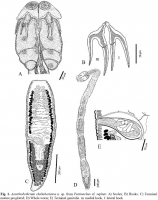
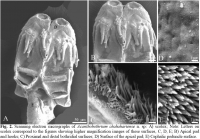
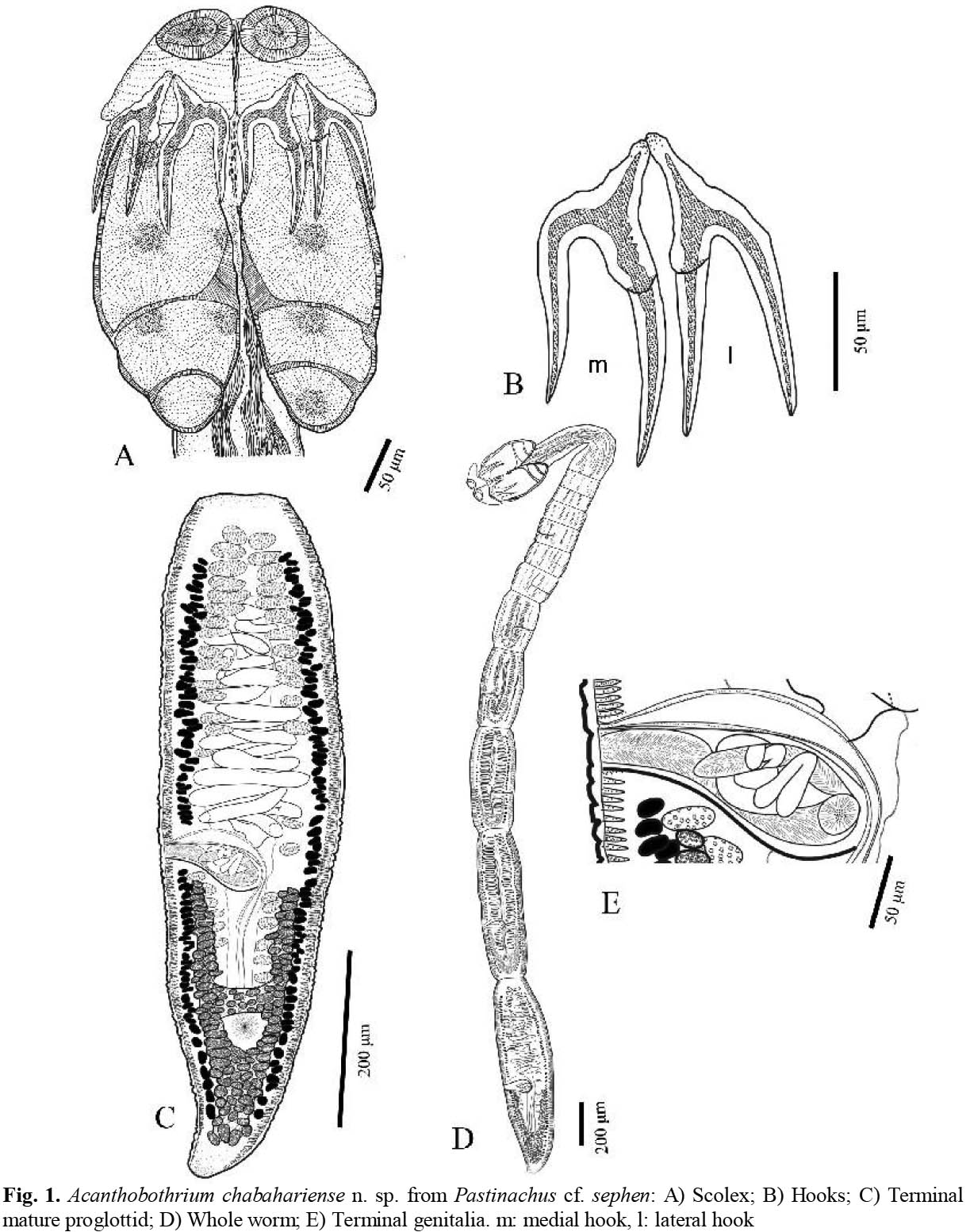 Fig. 1. Acanthobothrium chabahariense n. sp. from Pastinachus cf. sephen: A) Scolex; B) Hooks; C) Terminal mature proglottid; D) Whole worm; E) Terminal genitalia. m: medial hook, l: lateral hook
 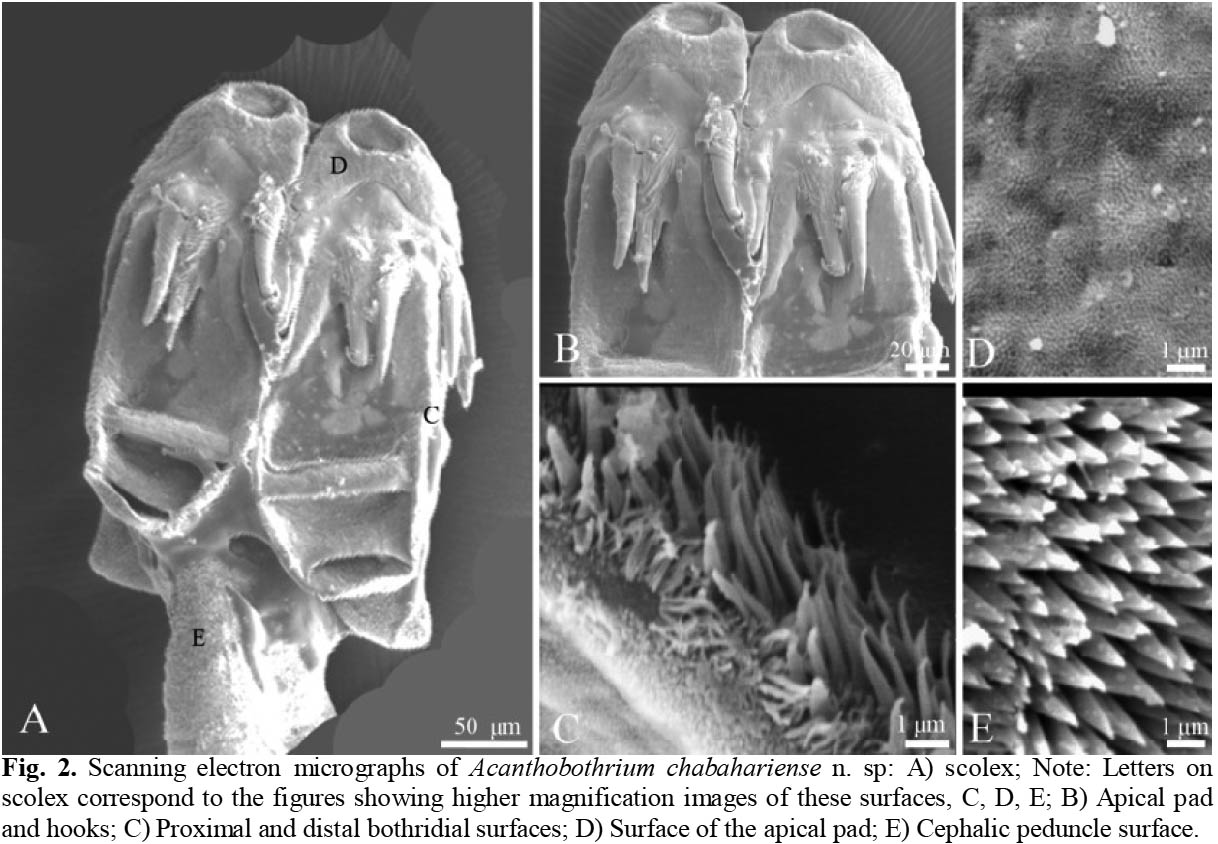 Fig. 2. Scanning electron micrographs of Acanthobothrium chabahariense n. sp: A) scolex; Note: Letters on scolex correspond to the figures showing higher magnification images of these surfaces, C, D, E; B) Apical pad and hooks; C) Proximal and distal bothridial surfaces; D) Surface of the apical pad; E) Cephalic peduncle surface.
 Best viewed in Firefox